what to do after youve written a screenplay
Earlier a Screenwriter can tell that next dandy love story, historical epic or zany comedy, they need to main screenplay format.
Agreement exactly how a script should look and exist formatted is important for two main reasons.
Get-go, cognition of each chemical element can go a long way in supporting the more creative aspects of screenwriting, such as creating memorable characters and building a solid story structure.
2d, equally scripts are meant to exist read, a solid screenplay format volition assist a reader move quickly through the story with ease, equally well as bespeak to them that the author of it is of a professional caliber.
Before we jump into those screenplay formatting essentials, though, let'southward tackle some ordinarily asked scripting questions that emerging Screenwriters frequently have.
And stay tuned, because as nosotros progress through our rundown of proper screenplay formatting, we'll be hearing about the business of screenwriting from Sharon Soboil (Afterwards Nosotros Brutal, After E'er Happy, Love on the Air) and Thomas Bezucha (The Good House, Marvel'southward upcoming Secret Invasion).
Brusque answer: Non a lot.
"Script" is a generic term that tin can refer to near any medium intended for a screen. That can mean a film, television show, web series or even a TikTok video.
The term screenplay is ordinarily reserved for a script intended to get a film, just many manufacture professionals also apply it when describing a Television script. As it would imply, the term teleplay refers only to a script for television.
What are the 5 elements of a screenplay?
Regardless of genre or story specifics, a successful screenplay will generally have these five elements in common:
1. Interesting characters. Audiences want to cheer for a sympathetic protagonist and hate on a stray adversary. They desire compelling supporting characters who either aid or hurt the protagonist'southward chances of attaining their central want or need. In brusque, a groovy script will have interesting and dynamic characters.
ii. Protagonist'southward goal. But why are we following the protagonist for two hours or more than? Spending that time just to watch them clean their business firm or run errands is not going to satisfy from a storytelling perspective. Instead, the protagonist must accept a clear and compelling goal. To survive a shipwreck. To win back their high school sweetheart. To be the first adult female on Mars. Brand the goal one where at that place is a run a risk of failure. It should never be a sure thing.
3. Compelling plot. What'due south the story that volition exist told equally the protagonist attempts to achieve their goal? Scripts are very much a prove and not tell form of storytelling. Dialogue is a critical office of a screenplay, but you won't have a compelling script if you just have the characters sitting around and talking about what they want. Give them stuff to do. Include plenty of action – fifty-fifty if it's not an activeness movie!
four. Strong script construction. Feature scripts generally follow a three-act structure. The first act introduces the principal characters, the stakes for the protagonist, and the inciting incident that sets them on their path to hopefully achieving their goal. The second act largely encompasses the highs and lows that the protagonist encounters as they move closer to or further away from their central want. Finally, the third act has the protagonist confront their final and nigh significant conflict – the climax – as well every bit the outcome to it.
To some caste, Screenwriters can tweak what happens in each act, but often the marker of a strong script is one that relies on having a solid three-act structure.
5. Conflict and resolution. It's great if y'all love your characters. After all, you'll probable be spending weeks if not months with them. Simply you lot have to brand life difficult for them. A story where the protagonist immediately achieves their goal with no struggle or heartache isn't much of a story at all. They need obstacles – and lots of them. That'south what makes ultimately the resolution where they do or don't get their want so satisfying for audiences.
That's what we're hither to teach you! Competent screenplay format relies on two factors: the elements that make upward the actual composition of the page such equally font, bespeak size, and page number, every bit well as the screenplay-specific devices that assist to tell the story.
Let's begin with the fundamentals of what yous run into on a script page.
Probably the most bones of the basics is the type of font used for scripts. The standard in the earth of screenplay formatting is Courierone. For a Screenwriter to get rogue and employ a different font can result in several outcomes.
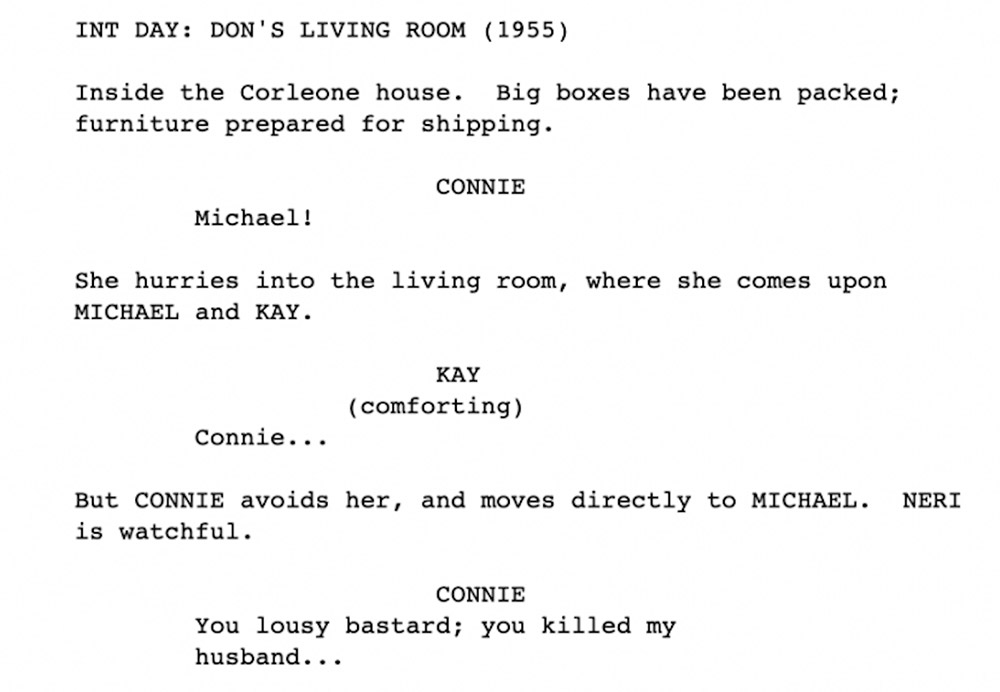
What you come across to a higher place is the Courier font, the universal standard font for screenplays.
For i, it can betoken to the reader that the writer of the script is either a novice regarding scripting rules or is simply someone who doesn't notice the rules important enough to abide by.
Two, a script written in some other font can throw off the typical fourth dimension causeless when using Courier, which is i minute of screen fourth dimension for one page of the script. For these reasons, Writers should stick to the standard of Courier font.
Again, every bit with font, screenplays have a typical bespeak size for all text, which is 12 signal.
The reason? Much the same as why scripts are written in Courier font. It demonstrates to the reader that the Screenwriter understands standard screenplay format, and information technology also helps to maintain the usual ratio of one minute of screen time for each folio of the script.
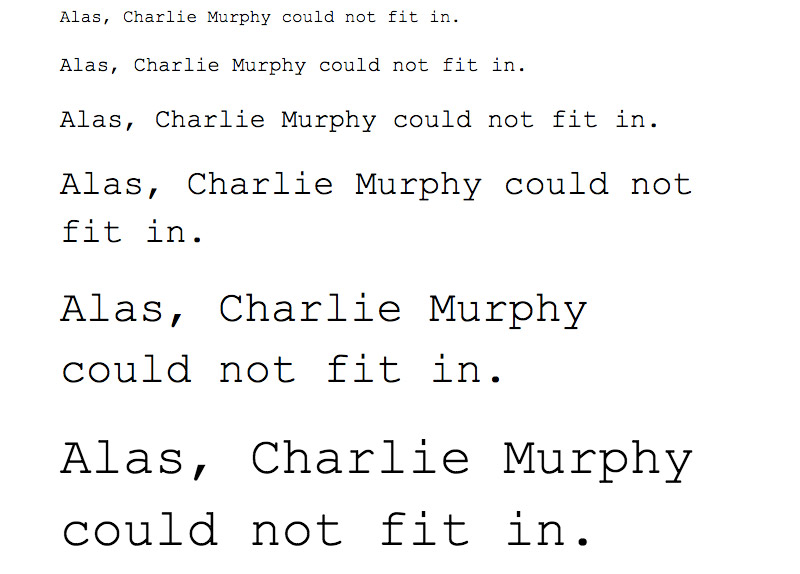
Those in entertainment have a trained middle when it comes to recognizing 12 point Courier font, and so make certain your script follows this industry-wide standard.
Moreover, a font smaller than 12 signal can arrive more than hard to read the screenplay, and a font larger may misrepresent there being enough of a story to tell, à la using a larger font for a schoolhouse essay to hit the required number of pages.
It's important to remember that for many Screenwriters, some of these basic script formatting rules are congenital into the many types of screenwriting software available to creatives, including the automatic improver of page number in the upper right-hand corner of each folio, minus the first page of the script.
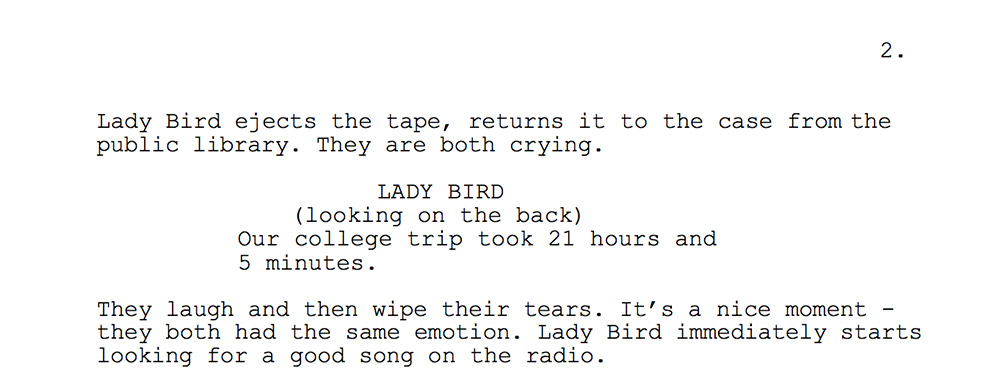
Page numbers are a must every bit screenplays frequently come in between ninety and 120 pages.
Only as with any program that tin experience the occasional glitch, Writers should e'er double-check that their work is properly formatted before sending off their scripts to Agents, Managers, executives or anyone else in a position to assistance that screenplay come to life.
As mentioned, the offset page of a script need non accept a page number, though every subsequent page should be numbered in proper numerical social club.
The title page should also be role of every script — with 1 important exception. Many moving picture festivals and contests that host competitions for best screenplay inquire that Writers get out off the title page, which typically includes identifying information so that the readers are not in whatsoever fashion biased about the material they are evaluating.
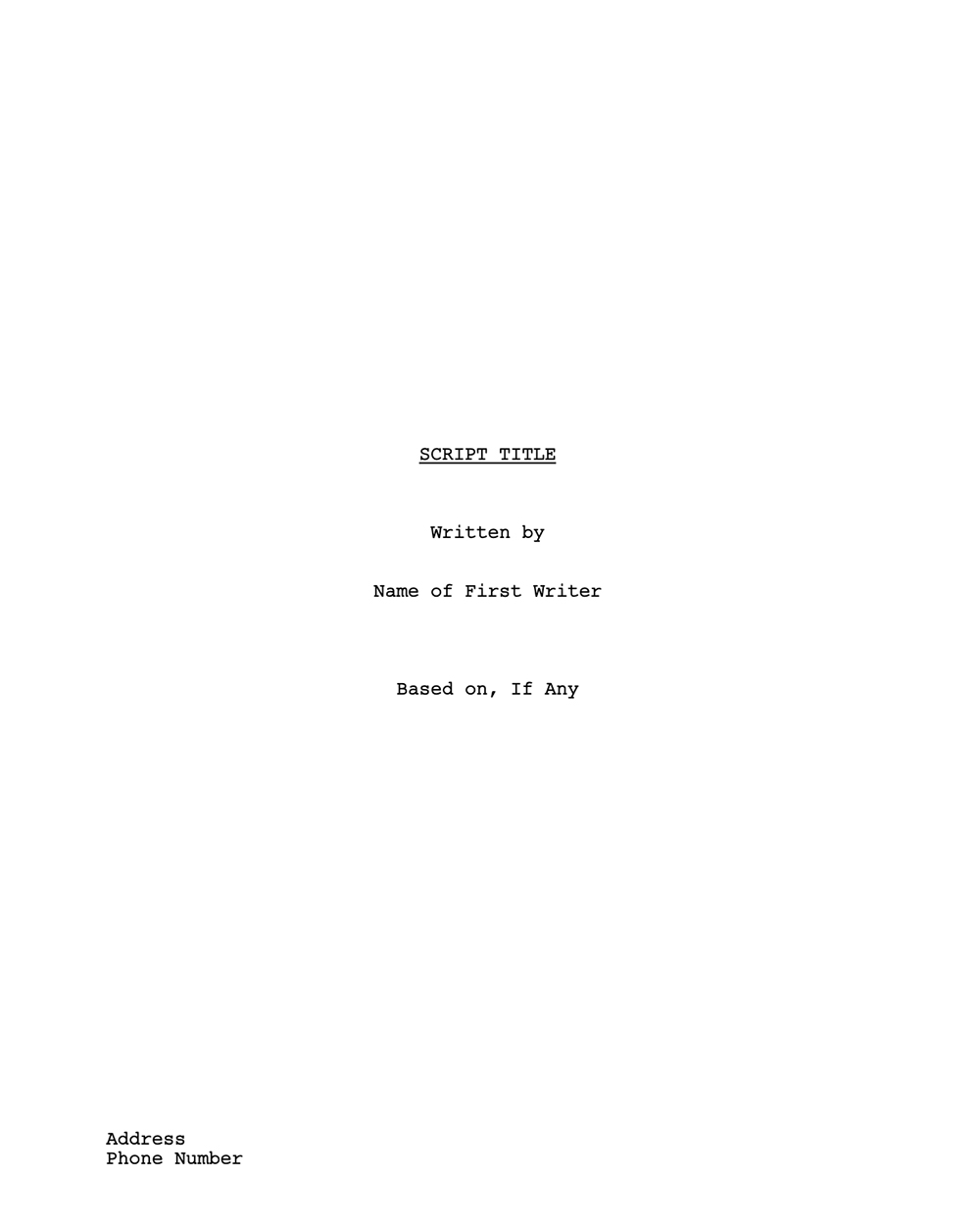
What yous see above is a generic title page. Be sure to personalize it earlier sending out your piece of work unless instructed otherwise.
Exterior of that particular circumstance, Writers should always include a championship folio when sending out their screenplays. On that folio should be the script championship, author proper noun, and contact information, such as email address and phone number, equally well as whatsoever WGA or U.S. Copyright registration numbers.
Time to move on to the specialized storytelling elements that are function of professional screenplay formatting!
What is the format of a screenplay?
A screenplay'southward format is unlike virtually any other class of storytelling.
A screenplay is not prose. Its purpose is to conspicuously and concisely draw what is going on from scene to scene so that should the script exist produced, other professionals who are part of the filmmaking process tin interpret what is written on the page to what is shot on set or location.
For this reason, what is on each folio is kept to minimum. If it's a new scene, there volition exist a scene heading to institute location and fourth dimension, also equally action lines to describe what the characters are doing in that scene. Should they exist speaking, at that place will also be dialogue.
There are additional screenplay format elements that tin can be used with discretion, but over again, the goal of a script is to vividly convey the location, activeness, and dialogue of any given scene with clarity and brevity.
What are the 8 elements of script formatting?
The 8 elements of script formatting include:
- Scene headings
- Graphic symbol names
- Action lines
- Dialogue
- Parentheticals
- Extension
- Subheaders
- More than/Cont'd
Allow's dive into each element 1-by-i.
Now onto the actual screenplay formatting elements! A Writer tin't tell a story without starting time alerting the reader to where they are, whether information technology'due south a farmhouse in Kansas or the purple residence of the fictional planet Asgard.
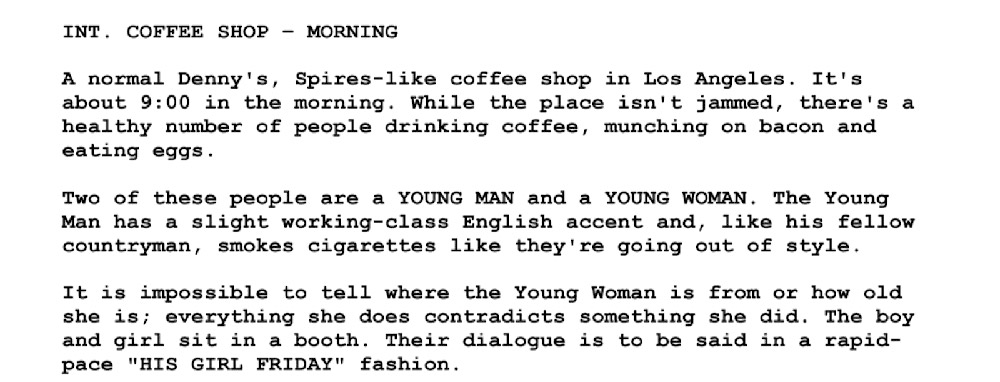
Accept a moment to call back about what comes to mind when you read the words "Coffee Shop – MORNING." That is why scene headings are so important, as they literally set the stage for the action.
Also referred to every bit sluglines, scene headings identify location and time of twenty-four hours, either independently (ex. "DAY," "Nighttime," "Forenoon," etc.) or in relation to the scene preceding it (ex. "CONTINUOUS," "MOMENTS LATER," etc.)2.
This one is fairly straightforward, but the importance of it should not be underestimated, especially when information technology comes to choosing character names3. A kickoff-time reader of a script can get easily confused by characters with similar names such as Ann and Amy, so when selecting names, aim for variety to minimize mix-ups.
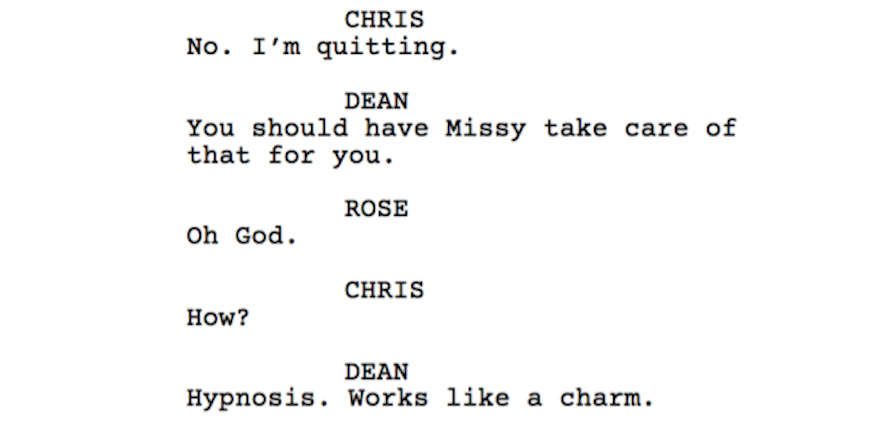
Grapheme names don't necessarily demand to be uncommon to make an impact, equally those from Go Out demonstrate. Just unique enough that the reader can differentiate them.
As well, while information technology's ultimately up to the Writer's preference, some screenwriting experts recommend e'er giving a name to fifty-fifty modest characters, such equally a Cop or Doctor with just a single line, the reason being that information technology allows the future Actor playing that role to more deeply place with it.
The goal of a script is to prove and not tell a story. As such, it'due south important that Writers not rely on action lines too heavily to explain the narrative. Keep it concise and in service to explaining but what cannot exist told through dialogue4.
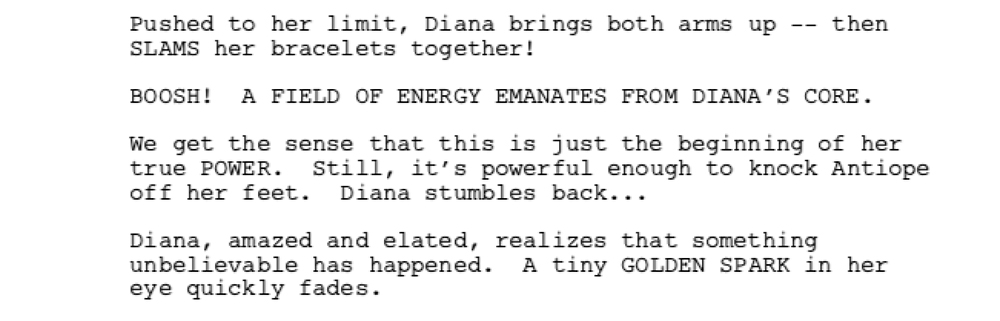
Action lines tin can be useful in helping a reader imagine what is taking place in a scene, simply screenwriters should ever be mindful of keeping them to the indicate.
Also, Writers should continue in mind that a screenplay is not a novel. Large chunks of text dull the power of the reader to get in through the script, and more than chiefly, may dissuade them from continuing to read information technology at all.
Some conventional wisdom is to keep as much "white on the page" as possible, likewise as to make certain each page allows the reader to "read vertically" rather than horizontally — i.e. too much description.
Nifty dialogue is 1 of the most disquisitional aspects of a good script and probably one of the well-nigh hard aspects of it to explicate. Why? Because dialogue relies entirely on the nature of the character speaking it. Is the grapheme a babbler? Are they curt? Do they speak with a dialect that sets them apart from everyone else in the story?
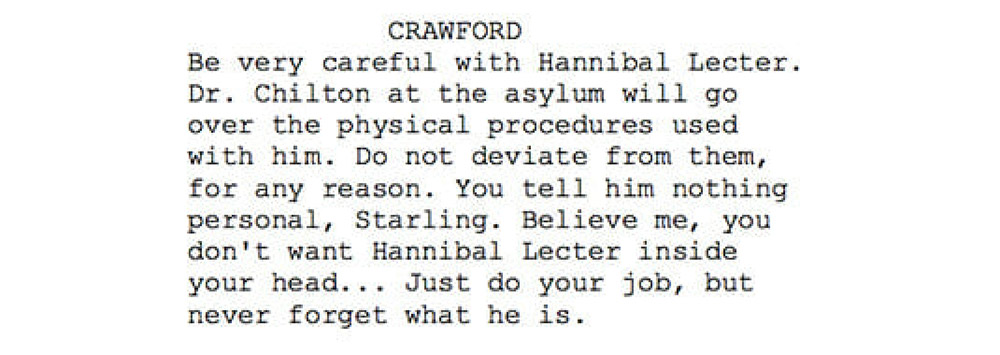
The dialogue of a character should ever help to inform their personality and who they are as information technology does for Crawford in The Silence of the Lambs.
Each of these questions points to creating distinct characters that could not be mistaken for anyone else in the narrative, which is one of the most crucial guidelines to keep in listen for dialoguev. In fact, some screenwriting experts advocate that each grapheme should be identifiable by their dialogue lone even when their graphic symbol names are removed from the script.
Related to dialogue is the use of parentheticals, which typically are used to aid inform how a line is spoken by a graphic symbolhalf-dozen. While parentheticals tin can be useful, a good rule of thumb is that the majority of dialogue — and its intended delivery — should be clear on its own.
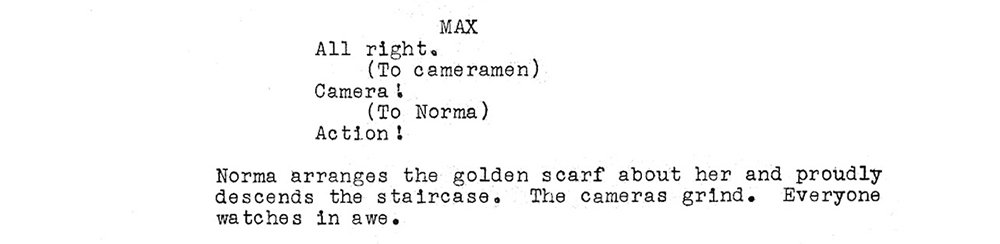
Every bit the parentheticals subtly indicate for this section of dialogue in Sunset Boulevard, Max should look at the cameramen to give his pedagogy.
Therefore, utilize parentheticals sparingly. Not only tin excessive utilise of them indicate to the reader that the dialogue isn't strong plenty to stand on its own, but besides information technology can hinder a time to come performance by the Actor playing that function, as they may feel boxed in creatively regarding delivery of their lines.
Another screenwriting element used in conjunction with grapheme and dialogue is that of extensions. Essentially, when a grapheme proper name is listed on its ain with their dialogue immediately following, it's assumed that the dialogue is spoken by that character on camera.
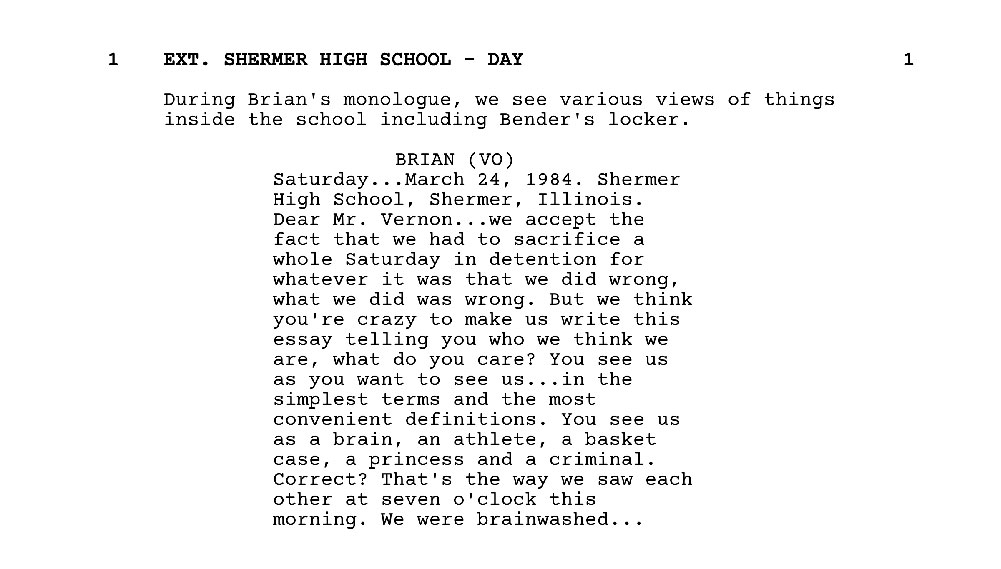
Throughout Brian's voiceover in The Breakfast Club, the viewer sees images from Shermer Loftier School that help to provide context for the story virtually to be told.
However, that's not always the intended example in cinematic storytelling. So to clarify, extensions are used. Two of the virtually common extensions are "V.O" and "O.S." The erstwhile, which stands for "voiceover," indicates that the dialogue is beingness spoken past the character to the reader, audience, or themselves internally rather than to some other character in their presenceseven.
The latter, which stands for "off-screen," means that the dialogue is being spoken by a grapheme off-camera.
Every bit with most screenplay formatting elements, the inclusion of "MORE" and "CONT'D" (brusk for Connected) volition likely be automatically inserted into a screenplay to help preserve fluidity and make sure the reader understands the continuation of dialogue.
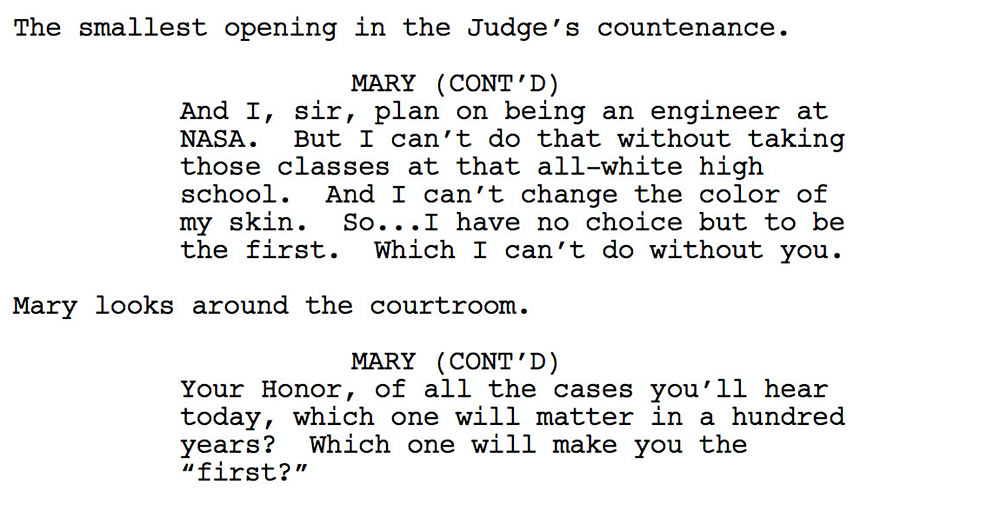
The action line breaks upward Mary'due south monologue from Hidden Figures, and the use of "CONT'D" shows that she resumes her dialogue before some other character speaks.
When there is a page break in a script, but dialogue that continues from one page to the side by side, "MORE" will be inserted at the bottom of the page to alarm the reader that the dialogue continues onto the following page.
On that next page, "CONT'D" will be inserted to once again reaffirm to the reader that the character'due south dialogue is still in progress. Nigh screenplay software will automatically insert "CONT'D" also if a character stops speaking and begins again earlier anyone else talks.
Bonus element!
And possibly two of the most exciting screenplay formatting elements are the use of "FADE IN" and "FADE OUT." Why? Because in many cases, these will exist the very commencement and concluding words of a script. While some Writers might brand alternate creative choices to brainstorm and finish their screenplays, these elements are the most common to signify the start and close of the narrative.
As such, Writers should include them to help guide the reader into and out of the script.
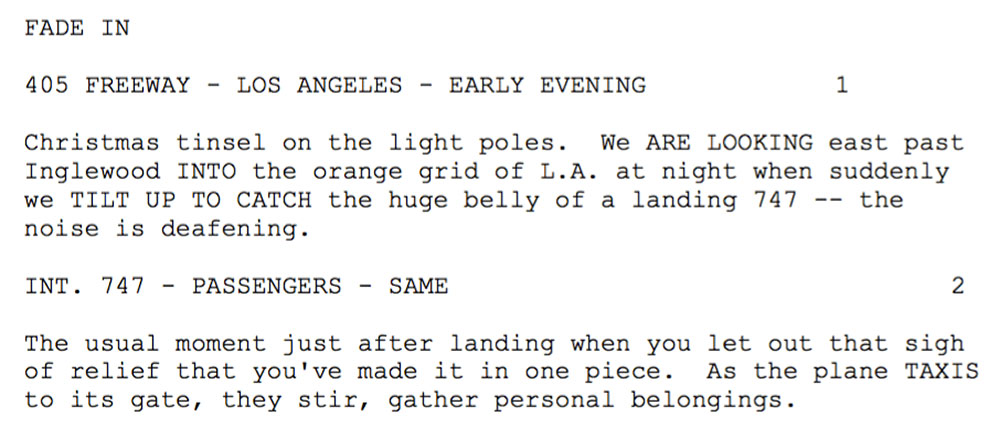
Well, information technology's clear that nosotros're not looking at the 405 freeway in Los Angeles. So why does the script read that after "FADE IN?" That'due south part of the magic of moviemaking! It can ever change betwixt script and final cut.
In mentioning "FADE OUT," information technology'due south maybe the platonic time to state that the above screenplay format elements do non comprehend all formatting tools at a Writer'due south disposal.
To fully empathize and take a mastery of those elements, Writers should take the time to explore their screenwriting software to learn more most what they can utilize to help explain their narratives.
While a unique story or compelling characters can make a screenplay stand out confronting the contest, it's creating a solid script formatting foundation and knowing how to heighten it that will as well guide Screenwriters towards hereafter success.
Simply to exist clear, no script needs to have a montage. Plenty of them don't. Hence, bonus element!
But a montage sequence tin be a corking tool for Screenwriters who desire to quickly show passage of time via a series of brief scenes – oftentimes set up to the score or soundtrack song – to continue the plot moving forrard.
Formatting a montage sequence tin exist done in several ways. Some Screenwriters like to list the diverse scenes by letter. Some use dashes to split up them. In some cases, the scenes are just formatted similar action lines should they be brief enough.
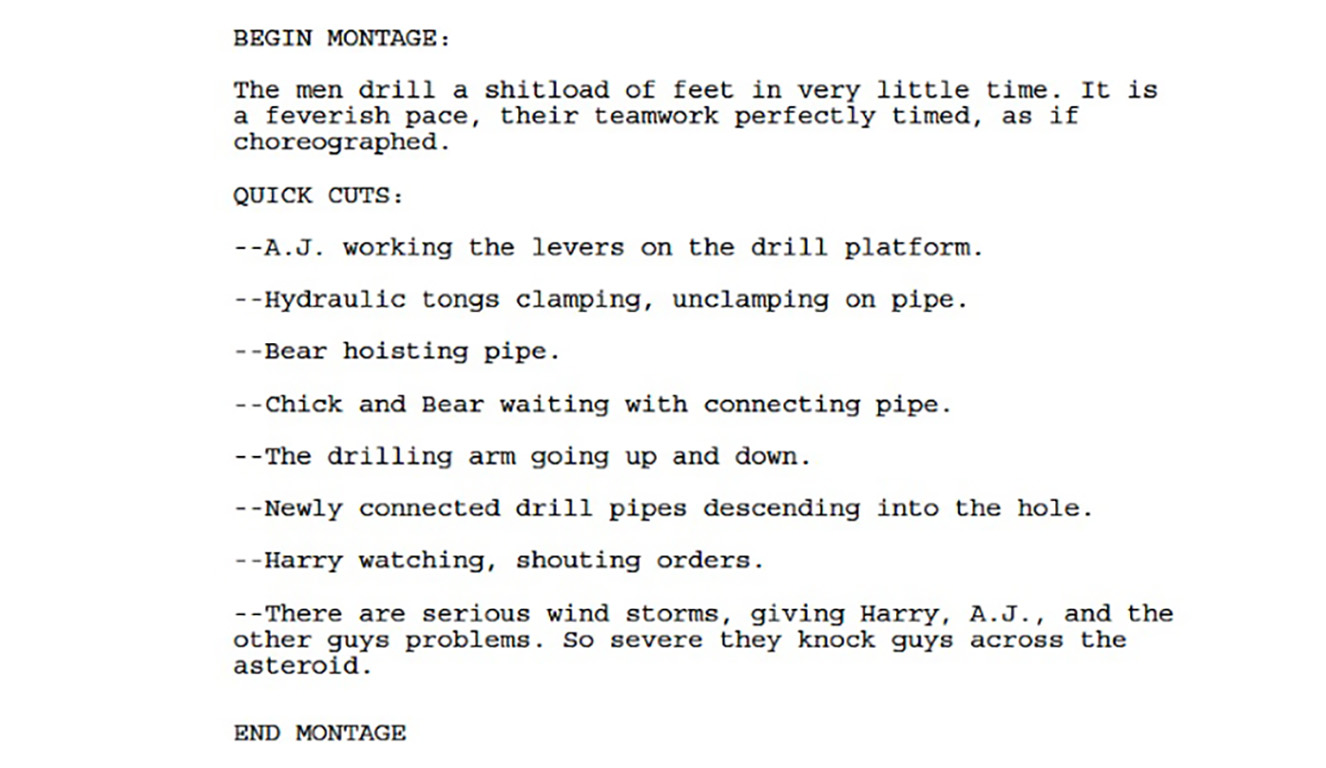
Clarity is king in screenwriting, which is why information technology'due south critical that yous always distinguish when y'all take a montage sequence.
Here'south the vital flake to go on in heed, though, if you decide to include a montage sequence: Make it clear that it is indeed a montage sequence.
That means bookending the sequence with "Brainstorm MONTAGE" and "Finish MONTAGE" each and every time yous include one to brand it abundantly articulate to the reader what it is that they are reading.
There's no hard and fast rule regarding screenplay length. That being said, the typical sweet spot is somewhere betwixt 90 and 120 pages.
A script substantially shorter than 90 pages is probably one with non plenty story or "stuff" going on to make it a satisfying narrative.
And a script that's longer than 120 pages? Well, here'south the thing. Your script is hopefully going to be read by other people. People who often read scripts all day long… Not to mention nights and weekends. When flipping through their reading options, practise y'all remember they'll pick the script that'southward 93 pages or 143 pages?
That'due south non to say that scripts unequivocally cannot be longer than 120 pages. If you're an established Screenwriter and have been hired to write a historical epic, it probably will be on the longer side.
But when you lot're first starting out and establishing yourself, it's ameliorate to err on having a shorter screenplay. Plus, many scripts longer than 120 pages often are bloated with scenes, dialogue, or other elements that can exist taken out to brand the story tighter.
We've been talking a lot about what is normally function of a screenplay. Just what most the no-nos?
The unfortunate truth is that you may only have a few pages to print someone reading your script. Often individuals like Agents or Producers won't go beyond page ten if they aren't connecting with the material. And then it's up to you lot to make sure that everything you take on the page should be there.
Here are some of the most common mistakes Screenwriters make when information technology comes to what shouldn't be in a screenplay:
Nosotros hate to exist stern here, but in that location is absolutely no excuse present to have typos in your script. Y'all must be putting your best proverbial human foot forward when y'all submit a script. Not simply tin typos be distracting for a reader, simply also they imply that the Screenwriter did not care enough to ensure their correction.
Screenwriting is hard. Often Screenwriters volition make an internal note to themselves well-nigh a item scene to remember that they want to edit the dialogue or make some other change. That'southward perfectly fine and even encouraged! Just make certain that you have removed all of those internal notes before submitting your script for someone else to read.
Yous really want your script to stand out, so instead of using the standard 12-indicate Courier font, you determine to go with Comic Sans. Or you really don't desire to edit your 150-folio script, and so you bring downwards the font to 10-point. Trust u.s.… The reader will notice the changes you lot make, and it won't be a positive response. Stick with traditional formatting basics.
Screenplays might be a testify and not tell medium, but that doesn't mean literally showing the reader what the scene should look like. Never include images, whether storyboards or other types of references, in your script.
It's a wonderful thing to be a Screenwriter. You lot literally have at your fingertips the ability to create characters, worlds, and stories all from your own imagination. That's your job in this crazy business organization we call the entertainment industry.
Only information technology'south not your job to dictate how the scenes you write will be shot. Of the many professionals who contribute to the filmmaking procedure, it's the purview of the camera section to make those specific choices.
Transitions can exist a disruptive part of the screenwriting procedure. Employ them? Not utilise them? Just like camera instructions, transitions – which are essentially editing instructions – should exist left to the professionals whose chore it will one twenty-four hour period exist to brand those decisions of how to move from one shot to the next. So apply transitions sparingly. Very sparingly.
A reader should without fail e'er understand what is happening in the globe of your script without you having to include additional explanatory information that is not diegetic to that globe. Non only do straight instructions brand for a distracting read, but also they indicate that the script itself is not strong enough to convey on its own the action, themes, or other elements of the story.
1 mode that Screenwriters circumvent the above note of not including instructions or data for the reader is to write elaborate action lines that get well beyond what is needed for the scene. For instance, unless information technology straight impacts the plot of the story, the reader doesn't need to know down to the color of the buttons what a character is wearing in each scene. Keep descriptions brusk and relevant.
Just as Screenwriters demand to trust other professionals like the Cinematographer and Flick Editor to understand how to moving-picture show and cut the produced version of their script, they must also trust the Actors who will be bringing the characters in their script to life.
On occasion, parentheticals are perfectly adequate to include for added guidance on how a particular line should be spoken. However, the inclusion of besides many of them indicates that either the Screenwriter is choosing dialogue that cannot sufficiently get across what the grapheme is trying to say or that they don't trust the Actors to convey those lines accurately – or both. In short, trust your Actors.
We keep talking about scripts, simply the truth is that there are dissimilar kinds of screenplays that are used within the manufacture.
A spec script is in many regards a sample script of a writer'south aptitude and way. If you're writing a spec script, you're writing a screenplay on your ain – no one has assigned it or hired you with the intention to pay y'all for your services.
That hardly means that it's a waste of time. On the contrary, almost every Screenwriter writes many, many, many spec scripts throughout their careers.
When simply starting out, a spec script is your way of showing Managers, Agents, Producers, and others simply how well you lot tin write. And even when you commencement to get hired for specific projects, you likely will however write spec scripts if y'all have a passion project you desire fabricated.
On the other hand, a shooting script is a script that will be used for production purposes and has been marked according to the guild in which the scenes will be shot.
And considering edits and updates to a script are incredibly common during even the production phase, a shooting script will follow a specific process for the inclusion of new pages with identifying markers like different page colors to go on rails of those changes.
To learn about the business side of screenwriting, we talked to Writers Sharon Soboil (After We Roughshod, After E'er Happy, Dearest on the Air) and Thomas Bezucha (The Adept House, Marvel's upcoming Clandestine Invasion). Hither's what they had to say about working with Managers and Agents and the procedure of selling your screenplay.
Do Screenwriters need Managers or Agents?
Sharon Soboil (Later We Fell, Later on Always Happy, Love on the Air)
Generally speaking, I'd say Managers are better than Agents. A Manager will go get you lot an Agent at some point. A Director tin can help y'all get meetings and go to know people and assist you lot to find your career trajectory in a macro sense.
An Agent is only there to sell you. They accept 500 clients, whereas a Manager is going to have a little scrap of fourth dimension for y'all. They can read your fabric. They can give you notes on your fabric. They tin can send it to people. I would expect for a Managing director first if I were going to get in that direction.
I've gone through periods where I didn't have a Managing director or Agent, but I had an Chaser. Depending on how many people you know and how ensconced in the industry you are–like if your begetter's a celebrity and tin can get you dinner with Marty Scorsese and you can get the script in directly–you probably don't need a Manager.
And so yous have an Chaser if Marty decides he's going to selection your material and that will be plenty for y'all. As soon as he does selection your textile, every Manager and Agent will want to sign you lot and they'll come up after you, which is a meliorate identify to be.
I of the things I love that's open to everybody via tickets is Sundance. Go to Sundance Festival–any festival. There are Agents and Managers there all the time and it's a much easier identify to meet people. Simply meet them and socialize. You don't have to sell yourself or annihilation but just continue in affect with them. That's such a great way to see Producers and Actors and talent. It's a cracking identify to go…and it'southward fun.
Thomas Bezucha (Marvel'due south Secret Invasion, The Good Business firm)
It definitely helps. I did a complex thing. I wrote a screenplay and I knew maybe 10 people that were tangentially involved with moving picture. I gave them each the script, hosted a dinner party, asked all those people there, and asked their advice. And I found a Producer that way.
How do yous sell a screenplay?
Thomas Bezucha (Marvel's Hole-and-corner Invasion, The Good Business firm)
Most places won't accept submissions unless it comes from an Amanuensis. And then how practise you get it to an Amanuensis? How do yous go started in the business?
I didn't go to film school. I retrieve people that become to film schoolhouse are engaged earlier and have an advantage that I didn't have.
My communication is you pick up a machete and beginning hacking your manner into the jungle. Everybody I know has taken a different path. I think everybody knows somebody who knows somebody who's in the business, and you lot sort of put it out at that place in one case you've got a script.
The other thing to know is, don't ask people to read scripts unless you know that what you're request them to read is the all-time version of that script. Don't submit professionally saying it'southward a work in progress. You lot're asking somebody to spend one-half a day with something.
Sharon Soboil (Later on Nosotros Fell, After Ever Happy, Dearest on the Air)
If you're brand new, I'd say ane of the best ways to sell it is to get into a contest. If you don't have a Director or an Agent and you don't live in LA, I would say the Nicholl's is fantastic. Scriptapalooza. Sundance Screenplay Competition. Austin Film Festival is getting bigger. Last Draft has one. Those kinds of competitions. Not the little ones, considering some of those that are really small-scale, they're non as significant and they're non going to exist looked at in the same way.
Go to a festival. It's frustrating when y'all don't have a movie in a festival, I'll be honest. A lot of the people at the festivals have a movie there and that's why they're at that place. And then they're happy and joyous and they just won a competition … and you're similar, "Oh I'm such a loser." But at the bigger ones, like Sundance, you tin totally go there and meet that person's Director or Agent, who's there because it's their customer. That'southward helpful.
And those aren't that expensive to go to. Go hang out at the bar or stand in line for any of the movies. And, once in the theater, say hullo to your neighbor. Brand it fun for yourself. If y'all don't come up off crazy or obnoxious, the people you see will most often respond in kind.
How long does it take to sell a screenplay?
Sharon Soboil (After We Fell, After Ever Happy, Love on the Air)
I have a movie that'south going into production that I wrote that'southward been optioned over and over. I won't even admit to y'all how long information technology'southward been effectually. It's finally getting made. The Queen'due south Gambit took 30 years.
I just wrote ii movies, After We Fell and Later on Ever Happy. I wrote the first one in March and the second one in June and they went into product in August. And it's already done! There's a trailer out for After We Fell. (I don't think I'thou allowed to tell when they are coming out.) That was a Writer-for-hire situation, so they went correct into production.
The average amount of time it takes to get a movie made is 7 years. It's a marathon. Sometimes yous merely striking at the right moment and they demand that movie and they have that money or they have an Player on board. Or something happens that merely shifts the dynamic of the projection. Before you know it, it's a year afterwards and you lot're going into product.
Observe a Producer that really loves it. That'southward what yous're looking for, no matter how long it takes. As you go more coveted every bit a Author, you can charge them for an option. In my humble stance, even if you lot're non in the Writers Guild, I e'er feel similar if somebody puts money downward, they're serious. Whether it'south $1,000 or $10,000, information technology holds them accountable.
I know newer Writers; you lot just desire people to be excited about your script and take it. I get that. Requite people a flow of fourth dimension and they'll show to yous that they like it. If it'south a big Producer, so I would requite them more flexibility. If it's a smaller Producer, I'd ask them to give you a little fleck of money because otherwise, they've got these projects that they've put out way more money for and those are going to be their commencement priority.
So it depends on who the Producer is, if they're new or if they've been effectually. Is the Producer an independent Producer? Are they taking the coin from their own pocket? Corking. Get a shopping understanding or get an option.

Sharon Soboil
An award-winning screenwriter, her showtime into characteristic writing took her around the globe: The sexual activity-trafficking story Catching India, for Jennifer Siebel Newsom; The Wine Revolt to Bordeaux; her period rom-com Of Corset's Mine to England, with Jason Connery directing being shot Summer 2021.
Keeping her sane during the covid lockdown, she was tapped by Voltage Pictures to suit the third and quaternary bestselling YA novels, Afterwards We Fell and After Ever Happy for the Later on franchise. Her true story ROO!, about a girl and her dog, is existence produced by Resonate and Metro Int'50. Her Tv movie Honey On The Air was Hallmark's submission for the Emmy's, and a Leo Honour winner.
She has written several shows for Amazon, Disney, and Freeform. Her one-half-hour comedy series Harmful If Swallowed, virtually the pharma earth, was bought by Participant Media. Her female person-led drama serial, HOT, is set up up with Bronwyn Cornelius and Element eight and she is developing the series SAVED with Kerry David, starring Sharon Leal. She has been brought on to develop the Tv serial based on the NY Times best-selling book series Marked Men.
She is ane of 36 storytellers in the off-Broadway show Menses Piece (streaming in Apr) a series of funny and moving stories nigh period. Sharon is an active member of the Women's Author's Social club Commission, and sits on the board of the Hollywood Women's Picture show Festival. She is repped past Josh Kesselman at Thruline Amusement.
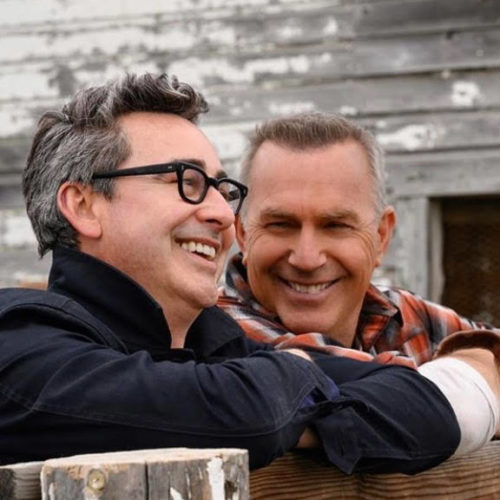
Thomas Bezucha
Thomas Bezucha recently adjusted the neo-noir western Let Him Go, from the novel past Larry Watson. Bezucha also directed and produced the film which starred Diane Lane, Kevin Costner, and Lesley Manville for Focus Features.
Bezucha's debut feature Big Eden, remains the nearly-honored film in the history of Gay and Lesbian Picture show Festivals and landed him on Diverseness'southward list of 10 Screenwriters to Watch in 2000.
His follow-upwardly, the hit holiday comedy The Family Stone, featured an ensemble cast led by Diane Keaton and as well starred Rachel McAdams, Luke Wilson, Claire Danes, Dermot Mulroney, Craig T. Nelson, and earned Sarah Jessica Parker a Golden World nomination for Best Operation by a Female person Lead in a Musical/Comedy in 2006.
Bezucha also directed Selena Gomez in Monte Carlo for 20th Century Trick and wrote the screenplays for The Guernsey Literary and Potato Pare Pie Society, directed by Mike Newell and starring Lily James, and The Good Firm with Sigourney Weaver and Kevin Kline, which will be released in 2021 from Tribeca Films and Amblin Partners.
Prior to his career in pic, Bezucha spent a decade in Artistic Services at Polo/Ralph Lauren, setting visual management for store and environment design worldwide.
- 1Screenwriting.io. "Is there a standard screenplay font?". Screenwriting.io. published: 2020. retrieved on: 17 September 2020
- 2Brown, Michael Ray. "Script Format: Scene Headings". Story Sense. published: 2018. retrieved on: 17 September 2020
- 3Hellerman, Jason. "How to Write Adept Grapheme Names in Your Screenplay". No Pic School. published: 20 December 2018. retrieved on: 17 September 2020
- 4Ferris, Michael. "The Magic Bullet: Action Lines". Script Magazine. published: xiii December 2010. retrieved on: 17 September 2020
- 5Miyamoto, Ken. "The Single Secret of Writing Swell Dialogue". Screen Craft. published: 24 September 2017. retrieved on: 17 September 2020
- 6August, John. "Using parentheticals". JohnAugust.com. published: ten September 2003. retrieved on: 17 September 2020
- 7StudioBinder Staff. "Formatting a Screenplay: How to Put Your Story Into Screenplay Format". StudioBinder. published: 5 August 2019. retrieved on: 17 September 2020
Source: https://www.careersinfilm.com/screenplay-format/

Post a Comment for "what to do after youve written a screenplay"